Translate

Thursday, October 25, 2012

S.S. Edmund Fitzgerald


Here are some images of Iron Shipwright's 1/350 scale S.S. Edmund Fitzgerald.
That's right, the one from the song.

From Wikipedia"
The SS Edmund Fitzgerald was an American Great Lakes freighter that made headlines after sinking in a Lake Superior storm on November 10, 1975, with the loss of the entire crew of 29. When launched on June 8, 1958, she was the largest boat on North America's Great Lakes, and she remains the largest boat to have sunk there. Nicknamed the "Mighty Fitz", "Fitz", or "Big Fitz", the ship suffered a series of mishaps during her launch: it took three attempts to break the champagne bottle used to christen her, and she collided with a pier when she entered the water.
For seventeen years the Fitzgerald carried taconite iron ore from mines near Duluth, Minnesota, to iron works in Detroit, Toledo, and other Great Lakes ports. As a "workhorse" she set seasonal haul records six times, often beating her own previous record. Her size, record-breaking performance, and "DJ captain" endeared the Fitzgerald to boat watchers. Captain Peter Pulcer was known for piping music day or night over the ship's intercom system while passing through the St. Clair and Detroit Rivers (between Lakes Huron and Erie), and entertaining spectators at the Soo Locks (between Lakes Superior and Huron) with a running commentary about the Fitzgerald.
Carrying a full cargo of taconite ore pellets with Captain Ernest M. McSorley in command, the Edmund Fitzgerald embarked on her final voyage from Superior, Wisconsin (near Duluth), on the afternoon of November 9, 1975. En route to a steel mill near Detroit, Michigan, she joined a second freighter, the SS Arthur M. Anderson. By the next day the two ships were caught in the midst of a massive winter storm on Lake Superior, with near hurricane-force winds and waves up to 35 feet (11 m) high. Shortly after 7:10 p.m. the Fitzgerald suddenly sank in Canadian waters 530 feet (160 m) deep, approximately 17 miles (15 nautical miles; 27 kilometers) from the entrance to Whitefish Bay near the twin cities of Sault Ste. Marie, Michigan and Sault Ste. Marie, Ontario. Although the Fitzgerald had reported being in difficulty earlier, no distress signals were sent before she sank. Her crew of 29 all perished, and no bodies were recovered.
Many theories, books, studies and expeditions have examined the cause of the sinking. The Fitzgerald may have fallen victim to the high waves of the storm, suffered structural failure, been swamped with water entering through her cargo hatches or deck, experienced topside damage, or shoaled in a shallow part of Lake Superior. The sinking of the Edmund Fitzgerald is one of the best-known disasters in the history of Great Lakes shipping. Gordon Lightfoot made it the subject of his 1976 hit song "The Wreck of the Edmund Fitzgerald".
Investigations into the sinking led to changes in Great Lakes shipping regulations and practices that included mandatory survival suits, depth finders, positioning systems, increased freeboard, and more frequent inspection of vessels.

From May 20 to 28, 1976, the U.S. Navy dived the wreck using its unmanned submersible, CURV-III, and found the Fitzgerald lying in two large pieces in 530 feet (160 m) of water. Navy estimates put the length of the bow section at 276 feet (84 m) and that of the stern section at 253 feet (77 m). The bow section stood upright in the mud, some 170 feet (52 m) from the stern section that lay face down at a 50-degree angle from the bow. The ship's midsection had been reduced to heaps of metal and taconite.
In 1980, during a Lake Superior research dive expedition, marine explorer Jean-Michel Cousteau, son of Jacques Cousteau, sent two divers from the RV Calypso in the first manned submersible dive to the Fitzgerald. The dive was brief, and although the dive team drew no final conclusions, they speculated that the Fitzgerald had broken up on the surface.
The Michigan Sea Grant Program organized a three-day dive to survey the Fitzgerald in 1989. The primary objective was to record 3-D videotape for use in museum educational programs and production of documentaries. The expedition used a towed survey system (TSS Mk1) and a self-propelled, tethered, free swimming remotely operated underwater vehicle (ROV). The Mini Rover ROV was equipped with miniature stereoscopic cameras and wide angle lenses in order to produce 3-D images. The towed survey system and the Mini Rover ROV were designed, built and operated by Chris Nicholson of Deep Sea Systems International, Inc. Participants included the National Oceanic and Atmospheric Administration (NOAA), the National Geographic Society, the United States Army Corps of Engineers, the Great Lakes Shipwreck Historical Society (GLSHS), and the United States Fish and Wildlife Service, the latter providing the RV Grayling as the support vessel for the ROV. The GLSHS used part of the five hours of video footage produced during the dives in a documentary and the National Geographic Society used a segment in a broadcast. Frederick Stonehouse, who wrote one of the first books on the Fitzgerald wreck, moderated a 1990 panel review of the video that drew no conclusions about the cause of the Fitzgerald's sinking.
Canadian explorer Joseph B. MacInnis organized and led six publicly funded dives to the Fitzgerald over a three-day period in 1994. Harbor Branch Oceanographic Institution provided the Edwin A. Link as the support vessel, and their manned submersible, the Celia. The GLSHS paid $10,000 for three of its members to each join a dive and take still pictures. MacInnis concluded that the notes and video obtained during the dives did not provide an explanation why the Fitzgerald sank. The same year, longtime sport diver Fred Shannon formed Deepquest Ltd., and organized a privately funded dive to the wreck of the Fitzgerald, using Delta Oceanographic's submersible Delta. Deepquest Ltd. conducted seven dives and took more than 42 hours of underwater video while Shannon set the record for the longest submersible dive to the Fitzgerald at 211 minutes. Prior to conducting the dives, Shannon studied NOAA navigational charts and found that the international boundary had changed three times before its publication by NOAA in 1976. Shannon determined that based on GPS coordinates from the 1994 Deepquest expedition, "at least one-third of the two acres of immediate wreckage containing the two major portions of the vessel is in U.S. waters because of an error in the position of the U.S.–Canada boundary line shown on official lake charts."
Shannon's group discovered the remains of a crew member wearing a life jacket lying alongside the bow of the ship, indicating that at least one of the crew was aware of the possibility of sinking. The life jacket had deteriorated canvas and "what is thought to be six rectangular cork blocks ... clearly visible." Shannon concluded that "massive and advancing structural failure" caused the Fitzgerald to break apart on the surface and sink.
MacInnis led another series of dives in 1995 to salvage the bell from the Fitzgerald. The Sault Tribe of Chippewa Indians backed the expedition by co-signing a loan in the amount of $250,000.Canadian engineer Phil Nuytten's atmospheric diving suit, known as the "Newtsuit", was used to retrieve the bell from the ship, replace it with a replica, and put a beer can in the Fitzgerald's pilothouse. That same year, Terrence Tysall and Mike Zee set multiple records when they used trimix gas to scuba dive to the Fitzgerald. The pair are the only people known to have touched the Fitzgerald wreck. They also set records for the deepest scuba dive on the Great Lakes and the deepest shipwreck dive, and were the first divers to reach the Fitzgerald without the aid of a submersible. It took six minutes to reach the wreck, six minutes to survey it, and three hours to resurface to avoid decompression sickness, also known as "the bends".


Tuesday, October 23, 2012

Hawker Typhoon

Here are some images of Revell's 1/32 scale Hawker Typhoon Mk 1B.
This aircraft served with the Royal Aircraft Establishment and the Aeroplane and Armament Experimental Establishement in 1941.

From Wikipedia"

The Hawker Typhoon was a British single-seat fighter-bomber, produced by Hawker Aircraft. While the Typhoon was designed to be a medium-high altitude interceptor, and a direct replacement for the Hawker Hurricane, several design problems were encountered, and the Typhoon never completely satisfied this requirement. Other external events in 1940 prolonged the gestation of the Typhoon.
Nicknamed the Tiffy in RAF slang, the Typhoon's service introduction in mid-1941 was also plagued with problems, and for several months the aircraft faced a doubtful future. However, in 1941 the Luftwaffe brought the formidable Focke-Wulf Fw 190 into service: the Typhoon was the only fighter in the RAF inventory capable of catching the Fw 190 at low altitudes and, as a result, secured a new role as a low-altitude interceptor. Through the support of pilots such as Roland Beamont the Typhoon also established itself in roles such as night-time intruder and a long-range fighter. From late 1942 the Typhoon was equipped with bombs; from late 1943 ground attack rockets were added to the Typhoon's armoury. Using these two weapons, the Typhoon became one of the Second World War's most successful ground-attack aircraft.

Only one complete Hawker Typhoon still survives – serial number MN235 – and it is on display at the RAF Museum in Hendon, North London. It was previously on display at the National Air and Space Museum (NASM) (Smithsonian Institution) before being presented to the museum in commemoration of the RAF's 50th Anniversary in exchange for a Hawker Hurricane.
Several other partial air frames are extant: Typhoon Ib EJ922 (Private; Ex-Peter Smith Collection), Typhoon Ia JR505 (Brian Barnes Collection), Typhoon Ib JP843 (Roger Marley Collection) and Typhoon Ib RB396 (Fort Veldhuis museum, Netherlands). Unidentified cockpit sections are on display at the Imperial War Museum, Duxford, and The Jet Age Museum in Gloucester.
A Hawker Typhoon replica at the Memorial de la Paix at Caen, France, was constructed using some original components.


Wednesday, October 17, 2012

U.S.S. Holland (SS-1) and Holland Boat No.1

Here are some images of Iron Shipwrights 1/72 scale U.S.S. Holland (SS-1) and Holland Boat No.1.
Over all this is a nice kit though I had to do some scratch work like the stand, anchor and masts.

From Wikipedia"
John Philip Holland (Irish: Seán Pilib Ó hUallacháin / Ó Maolchalann) (29 February 1840 – 12 August 1914) was an Irish engineer who developed the first submarine to be formally commissioned by the U.S. Navy, and the first Royal Navy submarine, the Holland 1.

Holland emigrated to the United States in 1873. Initially working for an engineering firm, he returned to teaching again for a further six years in St. John’s Catholic School in Paterson, New Jersey. In 1875, his first submarine designs were submitted for consideration by the U.S. Navy, but turned down as unworkable. The Fenians, however, continued to fund Holland's research and development expenses at a level that allowed him to resign from his teaching post. In 1881, Fenian Ram was launched, but soon after, Holland and the Fenians parted company angrily, primarily due to issues of payment within the Fenian organization, and between the Fenians and Holland. The submarine is now preserved at Paterson Museum, New Jersey.


Holland continued to improve his designs and worked on several experimental boats, prior to his successful efforts with a privately built type, launched on 17 May 1897. This was the first submarine having power to run submerged for any considerable distance, and the first to combine electric motors for submerged travel and gasoline engines for use on the surface. She was purchased by the U.S. Navy, on 11 April 1900, after rigorous tests and was commissioned on 12 October 1900 as USS Holland. Six more of her type were ordered and built at the Crescent Shipyard in Elizabeth, New Jersey. The company that emerged from under these developments was called The Electric Boat Company, founded on 7 February 1899. Isaac Leopold Rice became the company's first President with Elihu B. Frost acting as vice president and chief financial officer.
The USS Holland design was also adopted by others, including the Royal Navy in developing the Holland-class submarine. The Imperial Japanese Navy employed a modified version of the basic design for their first five submarines, although these submarines were at least 10 feet longer at about 63 feet. These submarines were also developed at the Fore River Ship and Engine Company in Quincy, MA.
 USS Holland (SS-1) was the United States Navy's first commissioned submarine, named for her Irish-American inventor, John Philip Holland, although not the first submarine of the US Navy, which was the 1862 Alligator. The boat was originally laid down as Holland VI, and launched on 17 May 1897.

The work was done at (Ret.) Navy Lieutenant Lewis Nixon's Crescent Shipyard of Elizabeth, New Jersey for John Holland's company, then known as the Holland Torpedo Boat Company. The craft was built under the supervision of John Holland, who designed the vessel and her details. The keel to this craft was laid at Nixon's Crescent Shipyard with both men present. The two men worked together using many of John Holland's proven concepts and patents to make the submarine a reality, each man complementing the other's contributions to the development of the modern submarine.
Holland VI included many features that submarines of the early 20th century would exhibit, albeit in later, more advanced forms. She had both an internal combustion engine for running on the surface, and an electric motor for submerged operation. She had a reloadable torpedo tube and a deck gun (a pneumatic dynamite gun). There was a conning tower from which the boat and her weapons could be directed. Finally, she had all the necessary ballast and trim tanks to make precise changes in depth and attitude underwater.
Holland VI eventually proved her validity and worthiness as a warship and was ultimately purchased by the U.S. government for the sum of $150,000 on 11 April 1900. She was considered to be the first truly successful craft of her type. The United States Government soon ordered more submarines from Holland's company, which were to be known as the Plunger class. These became America's first fleet of underwater naval vessels.
Holland VI was modified after her christening, and was renamed USS Holland (SS-1) when she was commissioned by the US Navy on 12 October 1900, at Newport, Rhode Island, with Lieutenant Harry H. Caldwell in command.
Holland was the first commissioned submarine in the US Navy and is the first of the unbroken line of submarines in the Navy. She was the third submarine to be owned by the Navy, however. (The first submarine was Propeller (also known as Alligator) and the second was Intelligent Whale.)
On 16 October 1900, in order to be kept serviceable throughout the winter, Holland left Newport under tow of the tug Leyden for Annapolis, Maryland, where she was used to train midshipmen of the United States Naval Academy, as well as officers and enlisted men ordered there to receive training vital in preparing for the operation of other submarines being built for the Fleet.[citation needed]
Holland proved valuable for experimental purposes in collecting data for submarines under construction or contemplation. Her 166 mi (267 km) surface run, from Annapolis to Norfolk, Virginia from 8–10 January 1901, provided useful data on her performance underway over an extended period.
Holland, along with six other Holland-type submarines, was based in New Suffolk, New York on the North Fork of Long Island from 1899–1905, prompting the hamlet to claim to be the First Submarine Base in the United States.
Except for the period from 15 June to 1 October, which was passed training cadets at the Naval Torpedo Station, Newport, Rhode Island, Holland remained at Annapolis as a training submarine until 17 July 1905.[contradiction]
Holland finished her career at Norfolk, Virginia. Her name was struck from the Naval Vessel Register on 21 November 1910. This revolutionary submarine was sold as scrap to Henry A. Hitner & Sons, of Philadelphia, Pennsylvania on 18 June 1913 for $100. Her purchaser was required to put up $5,000 bond as assurance that the submarine would be broken up and not used as a ship.
The success of the submarine was instrumental in the founding of the Electric Boat Company, now known as the General Dynamics Electric Boat, a division of General Dynamics Corporation. This company, therefore, can trace its origins to the formation of John Philip Holland's original company and the revolutionary submarines that were developed at this shipyard.

Holland Boat No. I was a prototype submarine designed and operated by John Philip Holland.
Work on the vessel began at the Albany Iron Works in New York City, moving to Paterson, New Jersey, in early 1878. The boat was launched on 22 May 1878. It was 14 feet long, weighed 2.25 tons, and was powered by a 4-horsepower Brayton petroleum engine driving a single screw. The boat was operated by Holland himself.
After several tests, on 6 June Holland conducted his first proper trial. The boat ran on the surface at approximately 3.5 knots, then submerged to a depth of 12 feet, before eventually surfacing. However, problems with the engine, meant that Holland eventually connected the engine, by a flexible hose, to a steam engine in an accompanying launch and powered the boat externally. In a second trial, Holland remained submerged for an hour. Holland eventually stripped the boat of usable equipment and scuttled it in the Passaic River.
These trails impressed Holland's backers, the Fenian Brotherhood who on the strength of this success financed the Holland Boat No. II, which became known as the Fenian Ram.
The vessel was recovered in 1927 and is now on display at the Paterson Museum in New Jersey.

Monday, October 15, 2012

The Work Of Francis Chin

Here are some images of Francis Chin's amazing work of ESCI's 1/9scale SdKfz 2 Kettenkrad. The figure is from ESCI as well. Much of the extra details were scratch built by Francis as well.
Photos by yours truley.

From Wikipedia"

The SdKfz 2, better known as the Kleines Kettenkraftrad HK 101 or Kettenkrad for short (Ketten = tracks, krad = military abbreviation of the German word Kraftrad, the administrative German term for motorcycle), started its life as a light tractor for airborne troops. The vehicle was designed to be delivered by Junkers Ju 52 aircraft, though not by parachute. The vehicle had the advantage of being the only gun tractor small enough to fit inside the hold of the Ju 52.
Steering the Kettenkrad was accomplished by turning the handlebars: if little movement was used then the wheel would steer the vehicle, however if they were turned further they would engage the track brakes to help make turns sharper. It was also possible to run the vehicle without the front wheel installed and this was recommended in extreme off-road conditions where speed would be kept low.
The SdKfz 2 was designed and built by the NSU Werke AG at Neckarsulm, Germany. First designed and patented in June 1939, it was first used in the invasion of the Soviet Union in 1941. Later in the war Stoewer from Stettin also produced Kettenkrads under license, accounting for about 10% of the total production.
Most Kettenkrads saw service on the Eastern Front, where they were used to lay communication cables, pull heavy loads and carry soldiers through the deep Russian mud. Later in the war, Kettenkrads were used as runway tugs for aircraft, especially for the Me 262 jet fighters. In order to save aviation fuel, the aircraft would be towed to the runway, rather than taxiing under their own power.
The vehicle was also used in the North African theater and on the Western Front.
The Kettenkrad came with a special trailer (Sd.Anh.1) that could be attached to it to improve its cargo capacity.
Being a tracked vehicle the Kettenkrad could climb up to 24° in sand and even more in hard ground, as long as the driver had courage for it.
Only two significant sub-variations of the Kettenkrad were constructed, and production of the vehicle was stopped in 1944, at which time 8,345 had been constructed. After the war the production at NSU went on until 1949 for agricultural use. Around 550 Kettenkrads were built postwar until 1948 (Some sources say 1949).

Saturday, October 13, 2012

Hawker Hurricane Mk 1

Here are some images of Airfix's 1/24 scale Hawker Hurricane Mk 1.  This aircraft was flown by Flt. Lt. Ian Gleed, 87 squadron based at Exeter, August 1940.

From Wikipedia'
The Hawker Hurricane is a British single-seat fighter aircraft that was designed and predominantly built by Hawker Aircraft Ltd for the Royal Air Force (RAF). Although largely overshadowed by the Supermarine Spitfire, the aircraft became renowned during the Battle of Britain, accounting for 60% of the RAF's air victories in the battle, and served in all the major theatres of the Second World War.
The 1930s design evolved through several versions and adaptations, resulting in a series of aircraft which acted as interceptor-fighters, fighter-bombers (also called "Hurribombers"), and ground support aircraft. Further versions known as the Sea Hurricane had modifications which enabled operation from ships. Some were converted as catapult-launched convoy escorts, known as "Hurricats". More than 14,000 Hurricanes were built by the end of 1944 (including about 1,200 converted to Sea Hurricanes and some 1,400 built in Canada by Canadian Car and Foundry).

 Hurricane Mk I
First production version, with fabric-covered wings, a wooden two-bladed, fixed-pitch propeller, powered by the 1,030 hp (768 kW) Rolls-Royce Merlin Mk II or III engines and armed with eight .303 in (7.7 mm) Browning machine guns. Produced between 1937 and 1939.
Hurricane Mk I (revised)
A revised Hurricane Mk I series built with a de Havilland or Rotol constant speed metal propeller, metal-covered wings, armour and other improvements. In 1939, the RAF had taken on about 500 of this later design to form the backbone of the fighter squadrons.

Tuesday, October 2, 2012

Subaru R-2

Here are some images of Tamiyas's 1/18 scale Subaru R-2 fresh out of its environment.

From Wikipedia"
The Subaru R-2 was a kei car manufactured by Subaru from 1969 to 1972. The R-2 was a full model change of the popular Subaru 360, but with an updated appearance and increased interior space. The R-2 appeared approximately one year before the Honda Life, Daihatsu Fellow Max and Suzuki Fronte kei cars, however, it continued to use the powertrain setup from the Subaru 360, which was the EK33 air-cooled 2-cylinder engine installed in the back, which is the inspiration for the name of the vehicle. It appeared around the same time as the second generation Mitsubishi Minica.
When the car was introduced February 8, 1969, Subaru took 25,000 orders for the car in one month.
In the early 1970s, the Japanese government enacted legislation to reduce emissions, which prompted Subaru and other manufacturers to upgrade engines that were air-cooled and using a two-stroke engine implementation. On October 7, 1971, the Subaru engine was upgraded to a two-stroke water-cooled engine, called the EK34 series engine, but the retrofit was hastily done, and was better achieved with the new 1972 Subaru Rex, which was available with both 2- and 4-doors. A styling upgrade was accomplished on the water-cooled R-2, adding a faux grille to the front of the vehicle that had no function other than a more modern appearance, as well as a corporate identity to the all new compact Subaru Leone.
Subaru continued with a rear engine platform so as to afford more trunk space up front and provide seating for four passengers, whereas competitors offered front engine front wheel drive vehicles to reduce noise intrusion from the engine and offer rear seats that folded down for increased cargo capacity, albeit with fewer passengers. In response to the rising popularity of front wheel drive front engine alternatives, Subaru offered a hatchback bodystyle February 16, 1970.
Performance versions of the R-2 came April 18, 1970, in the form of the R-2 SS with a dual exhaust and an increase in the compression ratio from 3.8 kg·m (37 N·m; 27 lb·ft)at 6,400 RPM to 7.5 kg·m (74 N·m; 54 lb·ft)at 7,000 RPM, and a higher trim level called the R-2 GL October 5. Another contributor to the early cancellation of the R-2 was its handling characteristics, which were found to be not as stable as vehicles that were front engine, front wheel drive.

Saturday, September 29, 2012

Tugboat

Here are some images of Lindberg Models 1/87 scale Diesel Tugboat.
My one complaint about this old kit is that a few years ago one could pick up this kit for about $20. Now you'd be hard pressed to find it for less than $50 and as the kit stands by itself is not worth $50.
However with a bit of work it turns out a fairly decent specimen.
I realize the addition of the tires may be a bit on the large side but I like them.

From Wikipedia"
 A tugboat (tug) is a boat that maneuvers vessels by pushing or towing them. Tugs move vessels that either should not move themselves, such as ships in a crowded harbor or a narrow canal, or those that cannot move by themselves, such as barges, disabled ships, or oil platforms. Tugboats are powerful for their size and strongly built, and some are ocean-going. Some tugboats serve as icebreakers or salvage boats. Early tugboats had steam engines, but today have diesel engines. Many tugboats have firefighting monitors, allowing them to assist in firefighting, especially in harbors.

Tugboat engines typically produce 500 to 2,500 kW (~ 680 to 3,400 hp), but larger boats (used in deep waters) can have power ratings up to 20,000 kW (~ 27,200 hp) and usually have an extreme power:tonnage-ratio (normal cargo and passenger ships have a P:T-ratio (in kW:GRT) of 0.35 to 1.20, whereas large tugs typically are 2.20 to 4.50 and small harbour-tugs 4.0 to 9.5). The engines are often the same as those used in railroad locomotives, but typically drive the propeller mechanically instead of converting the engine output to power electric motors, as is common for diesel-electric locomotives. For safety, tugboats' engines often feature two of each critical part for redundancy.
A tugboat's power is typically stated by its engine's horsepower and its overall bollard pull.
Tugboats are highly maneuverable, and various propulsion systems have been developed to increase maneuverability and increase safety. The earliest tugs were fitted with paddle wheels, but these were soon replaced by propeller-driven tugs. Kort nozzles have been added to increase thrust per kW/hp. This was followed by the nozzle-rudder, which omitted the need for a conventional rudder. The cycloidal propeller was developed prior to World War II and was occasionally used in tugs because of its maneuverability. After WWII it was also linked to safety due to the development of the Voith Water Tractor, a tugboat configuration which could not be pulled over by its tow. In the late 1950s, the Z-drive or (azimuth thruster) was developed. Although sometimes referred to as the Schottel system, many brands exist: Schottel, Z-Peller, Duckpeller, Thrustmaster, Ulstein, Wärtsilä, Berg Propulsion, etc. These propulsion systems are used on tugboats designed for tasks such as ship docking and marine construction. Conventional propeller/rudder configurations are more efficient for port-to-port towing.
The Kort nozzle is a sturdy cylindrical structure around a special propeller having minimum clearance between the propeller blades and the inner wall of the Kort nozzle. The thrust:power ratio is enhanced because the water approaches the propeller in a linear configuration and exits the nozzle the same way. The Kort nozzle is named after its inventor, but many brands exist.
A recent Dutch innovation is the Carousel Tug, winner of the Maritime Innovation Award at the Dutch Maritime Innovation Awards Gala in 2006. The Carousel Tug adds a pair of interlocking rings to the body of the tug, the inner ring attached to the boat, with the outer ring attached to the towed ship by winch or towing hook. Since the towing point rotates freely, the tug is very difficult to capsize.
The Voith Schneider propeller (VSP), also known as a cycloidal drive is a specialized marine propulsion system. It is highly maneuverable, being able to change the direction of its thrust almost instantaneously. It is widely used on tugs and ferries.
From a circular plate, rotating around a vertical axis, a circular array of vertical blades (in the shape of hydrofoils) protrude out of the bottom of the ship. Each blade can rotate itself around a vertical axis. The internal gear changes the angle of attack of the blades in sync with the rotation of the plate, so that each blade can provide thrust in any direction, very similar to the collective pitch control and cyclic in a helicopter.

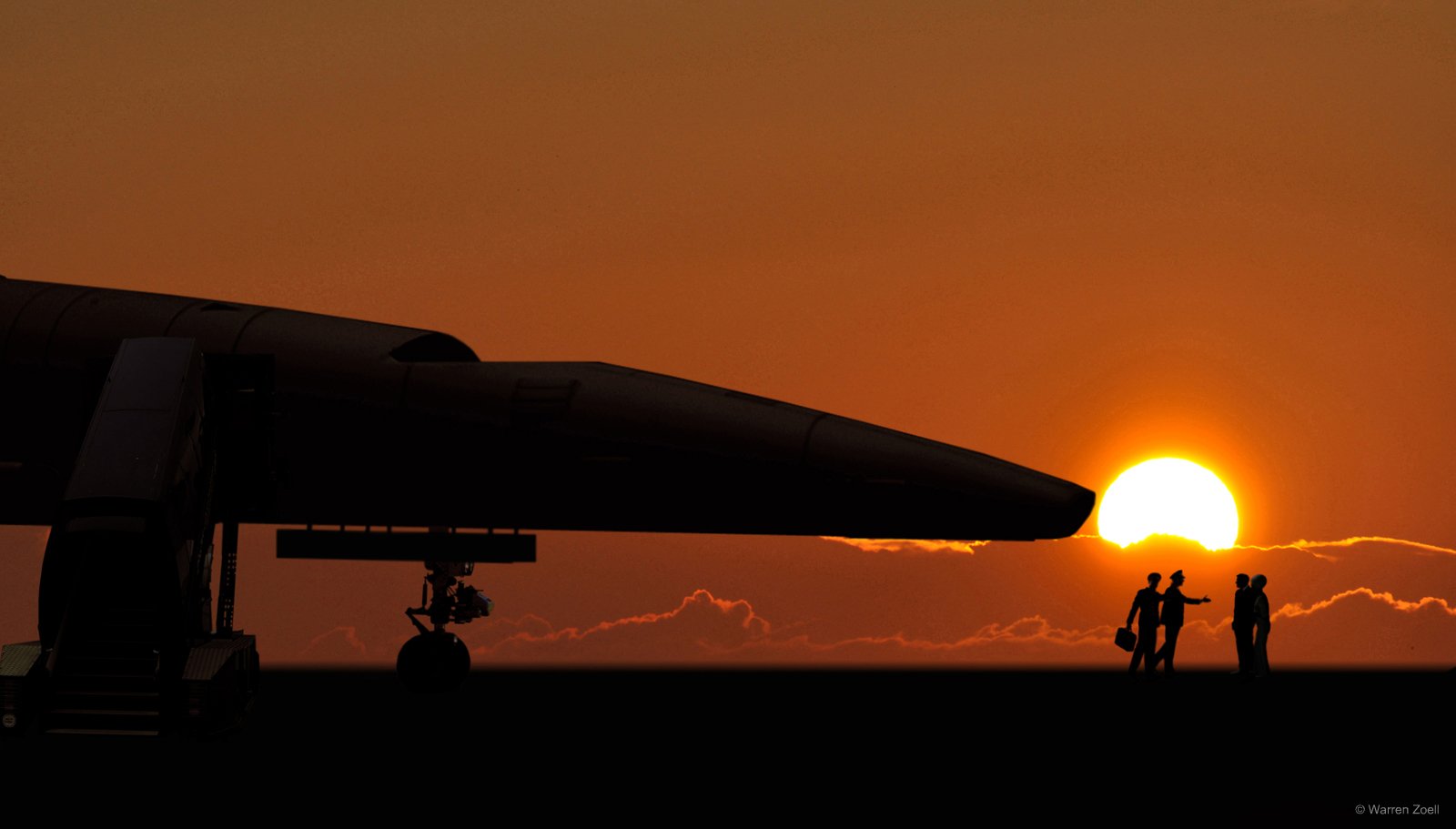
Orion III - 2001 A Space Odyssey Movie Poster Composite

Here are my composite images of a 2001 a space odyssey poster featuring the Orion III Space Clipper. The two images are shown with type and without.
The Orion III Space Clipper is the Moebius Models 1/160 scale kit.
The landing gear, boarding stairs, background, MGM logo and silhouettes are borrowed from various images.
The type is Futura Bold in case anyone's interested.

You will note that two of the silhouettes are actually an image of Dr. Heywood Floyd and the Pan American flight attendant.

Thursday, September 27, 2012

Viking Ship

Here are some images of Revell's 1/50 scale Viking Ship.
I know I said I wouldn't build plastic ships but like the Roman Trireme I couldn't resist. A classic kit.

From Wikipedia"
Viking ships were vessels used during the Viking Age in Northern Europe. Scandinavian tradition of shipbuilding during the Viking Age was characterized by slender and flexible boats, with symmetrical ends with true keel. They were clinker built, which is the overlapping of planks riveted together. They might have had a dragon's head or other circular object protruding from the bow and stern, for design, although this is only inferred from historical sources.
They ranged in the Baltic Sea and far from the Scandinavian home areas, to Iceland, Greenland, Newfoundland, the Mediterranean, and Africa.
The ships are normally divided into classes based on size and function.
 In recent generations, the war ship has become the cultural icon of the Vikings. This trend is not particularly shocking, as the ship functioned as the centerpiece of Scandinavian culture for centuries. In fact, the importance of the Viking ship is deeply rooted in Scandinavian culture, as the vessel served both pragmatic and religious purposes. Scandinavia is a region with relatively high inland mountain ranges and easy access to coastal ports. Consequently, trade routes primarily operated via shipping, as inland trading was both hazardous and cumbersome. Viking kingdoms thus developed into coastal cities, all of which were deeply dependent on the North Sea for survival and development. Control of the waterways was then of critical importance, and consequently the most advanced war ships were in high demand. In fact, because of their overwhelming importance, ships became a mainstay of the Viking pagan religion, as they evolved into symbols of power and prowess. Throughout the first millennia, respectable Viking chieftains and noblemen were commonly buried with an intact, luxurious ship to transport them to the afterlife. Furthermore, the Hedeby coins, among the earliest known Danish currency, have ships as emblems, showing the importance of naval vessels in the area. Through such cultural and practical significance, the Viking ship progressed into the most powerful, advanced naval vessel in Viking Age Europe.

With such vast technological improvements, the Vikings began making increasingly more ocean voyages, as their ships were infinitely more sea worthy. In order to sail in ocean waters, the Vikings needed to develop methods of relatively precise navigation. Most commonly, a ship was piloted using ancestral knowledge. Essentially, the Vikings simply used prior familiarity with tides, sailing times, and landmarks in order to route courses. In fact, scholars contend that the mere position of a whale allowed the Vikings to determine their direction. Whales feed in highly nutritious waters, commonly found in regions where landmasses have pushed deep-water currents towards shallower areas. The sighting of a whale consequently functioned as a signal land was near. However, some academics also argue that the Vikings developed more tangible means of navigation. Many claim the Vikings used a sun compass to show their direction. A wooden half-disc found on the shores of Narsarsuaq, Greenland seems to initially lend credibility to this belief. However, upon investigation of the object, scholars found that the slits circumnavigating the disc are disproportionately spaced, casting severe doubts about its role as an accurate compass. Many now hold that the instrument is a “confession disc,” used by priests to count the number of confessions in their parish. In a similar sense, researchers and historians continually debate the use of sunstone in Viking navigation. Recent studies identify the sunstone, with its ability to polarize light, as a plausible method for determining direction. The sunstone effectively has the potential to show the positioning of the sun, even if obscured by clouds, by showing which direction light waves are oscillating. The stone will become a certain color based on the direction of the waves, but the process is only possible if the object is held in an area with direct sunlight. Thus, most scholars debate the reliability and the plausibility of using a navigational tool that can only determine direction in such limited conditions.
Viking sagas routinely tells of voyages where vikings suffer from being "hafvilla" (bewildered): voyages beset by fog or bad weather where they completely lost their sense of direction. This description suggests they did not use a sunstone to aid them when the sun was obscured. Also, they would experience hafvilla when the wind died, implying they relied on prevailing winds to navigate, further supporting the use of ancestral knowledge for piloting.
 One Viking custom was to bury dead lords in their ships. The dead man’s body would be carefully prepared and dressed in his best clothes. After this preparation, the body would be transported to the burial-place in a wagon drawn by horses. The lord’s favorite horses and often, a faithful hunting-dog, were killed to be buried with the deceased man. The man would be placed on his ship, along with many of his most prized possessions. The Vikings firmly believed that the dead man would sail to the after-life in his ship, a belief similar to that of the ancient Egyptians.

Monday, September 24, 2012

de Havilland Mosquito NF MkII Night Fighter Composite II

Here is my composite image of Revell/Paragon 1/32 scale de Havilland Mosquito NF MkII Night Fighter at sunset being prepared for a night sortie.


Images of the model can be seen here.

Saturday, September 22, 2012